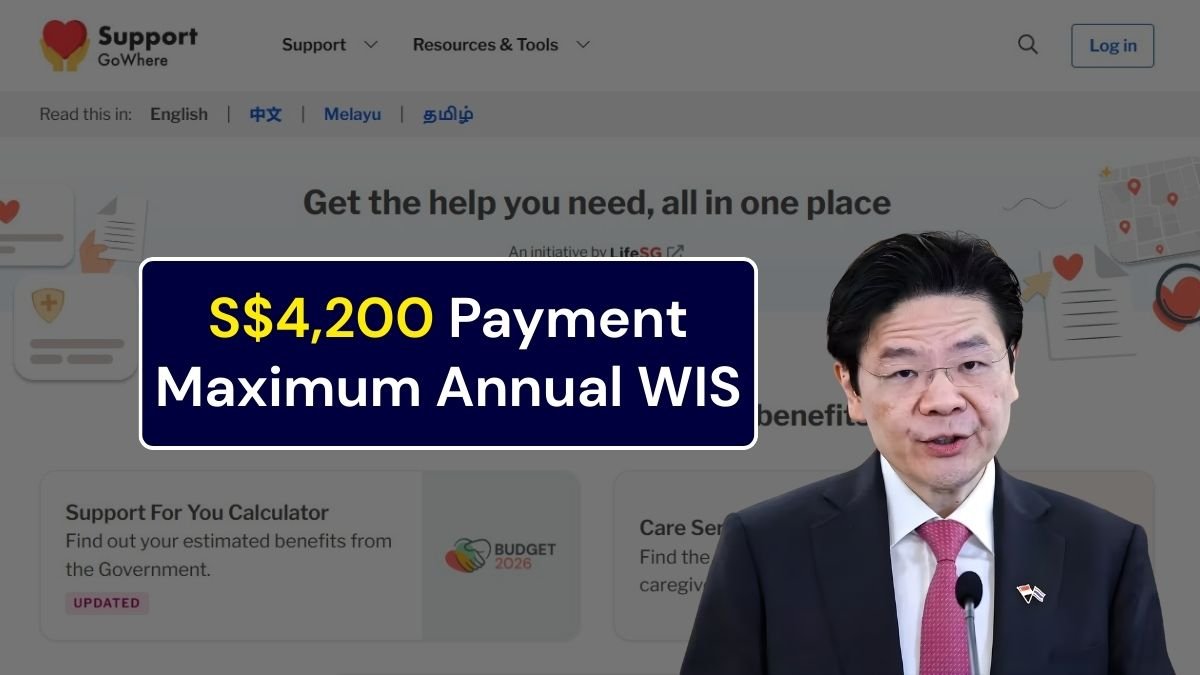
Singapore’s Workfare Income Supplement (WIS) scheme plays a crucial role in supporting lower-income workers. Introduced by the Singapore Government, the programme provides cash payments and CPF contributions to eligible workers, helping them build retirement savings while boosting their current income.
In 2026, many Singapore workers are expected to benefit from the scheme. Understanding the exact Workfare payout schedule, eligibility requirements, and payment methods can help workers plan their finances better.
This guide explains when Workfare payments are credited in 2026, how much workers can receive, and how to check their payout status.
What Is the Workfare Income Supplement (WIS) Scheme?
The Workfare Income Supplement (WIS) scheme is designed to support lower-wage Singaporean workers by supplementing their income and encouraging continued employment.
The scheme provides payouts in two ways:
- Cash payments credited directly to workers’ bank accounts or GovCash
- CPF contributions deposited into the worker’s CPF account to support retirement savings
The WIS scheme mainly benefits:
- Employees earning lower wages
- Self-employed persons (SEPs)
- Older workers who may face employment challenges
Payments are typically issued monthly for employees, while self-employed workers receive annual payments after declaring income.
Workfare Payout Schedule 2026 (Employees)
Employees receive WIS payments monthly, usually credited two months after the work month.
Below is the estimated Workfare payout schedule for 2026 based on the standard payment cycle.
| Work Month | Estimated WIS Payment Date |
|---|---|
| January 2026 | End of March 2026 |
| February 2026 | End of April 2026 |
| March 2026 | End of May 2026 |
| April 2026 | End of June 2026 |
| May 2026 | End of July 2026 |
| June 2026 | End of August 2026 |
| July 2026 | End of September 2026 |
| August 2026 | End of October 2026 |
| September 2026 | End of November 2026 |
| October 2026 | End of December 2026 |
| November 2026 | End of January 2027 |
| December 2026 | End of February 2027 |
The payment is usually credited through:
- PayNow-NRIC
- Direct bank transfer
- GovCash (for those without bank accounts)
Workers are encouraged to link their NRIC to PayNow to receive payouts faster.
Workfare Payout Schedule 2026 (Self-Employed Persons)
Self-employed persons (SEPs) receive one annual payout instead of monthly payments.
To qualify, SEPs must:
- Declare their Net Trade Income (NTI) to IRAS.
- Make the required Medisave contributions.
Once these conditions are met, the Workfare payout is typically credited by April of the following year.
Example
If a self-employed person earns income in 2026, the Workfare payment will typically be credited by April 2027 after income declaration and Medisave contributions are verified.
Workfare Eligibility Criteria (2026)
To receive WIS payouts in 2026, workers must meet the following eligibility requirements.
Basic Requirements
- Must be a Singapore Citizen
- Must be aged 30 and above (or any age if disabled)
- Must earn no more than SGD 2,500 per month
- Must work regularly and receive CPF contributions
Additional Criteria
- Live in a property with Annual Value not exceeding SGD 21,000
- Do not own more than one property
- If married, the couple’s combined income must not exceed SGD 70,000
Workers who meet these criteria will automatically be assessed for WIS eligibility.
How Much Workfare Can You Receive in 2026?
The amount of Workfare payouts depends on:
- Age group
- Average monthly income
- Employment status (employee or self-employed)
Below is a simplified overview of the maximum annual Workfare payouts.
| Age Group | Maximum Annual WIS |
|---|---|
| 30–34 | Up to SGD 1,700 |
| 35–44 | Up to SGD 2,500 |
| 45–59 | Up to SGD 3,000 |
| 60 and above | Up to SGD 4,200 |
Typically:
- 40% of the payout is given in cash
- 60% goes into CPF savings
This structure helps workers manage immediate expenses while building long-term retirement security.
How to Check Your Workfare Payment Status
Workers can check their payout status through several official platforms.
1. CPF Website
Workers can log in to the CPF portal using Singpass to check:
- WIS eligibility
- Payment status
- CPF contribution details
2. Workfare Notification Letters
Eligible workers will receive notification letters explaining:
- Expected payment amounts
- Payment dates
- CPF contributions credited
3. SMS Notifications
Some workers may receive SMS alerts once their Workfare payments are credited.
Why the Workfare Scheme Matters for Singapore Workers
The Workfare Income Supplement scheme is part of Singapore’s broader strategy to support lower-wage workers and promote inclusive growth.
Key benefits include:
Income Support
Cash payouts help workers manage daily expenses such as:
- Utilities
- Transportation
- Household costs
Retirement Savings
CPF contributions strengthen long-term financial security.
Encouragement to Stay Employed
Workfare incentivises workers to stay active in the workforce, even at older ages.
The programme complements other initiatives such as:
- Progressive Wage Model (PWM)
- Workfare Skills Support (WSS)
- SkillsFuture training programmes
Together, these policies aim to uplift wages and improve career opportunities.
Tips to Receive Workfare Payments Faster
To ensure faster payouts in 2026, workers should:
Link NRIC to PayNow
PayNow ensures the fastest payout method.
Ensure CPF Contributions Are Updated
Employers must submit CPF contributions on time for eligibility checks.
Update Personal Information
Make sure bank account and contact details are correct.
Self-Employed Workers Should Declare Income Early
Declaring income to IRAS promptly can prevent delays in annual Workfare payouts.
FAQ: Workfare Payout Schedule 2026 Singapore
When will the first Workfare payout for 2026 be paid?
The first payout for work done in January 2026 is expected to be credited by the end of March 2026.
How often are Workfare payments made?
Employees receive monthly payouts, while self-employed persons receive one annual payout after income declaration.