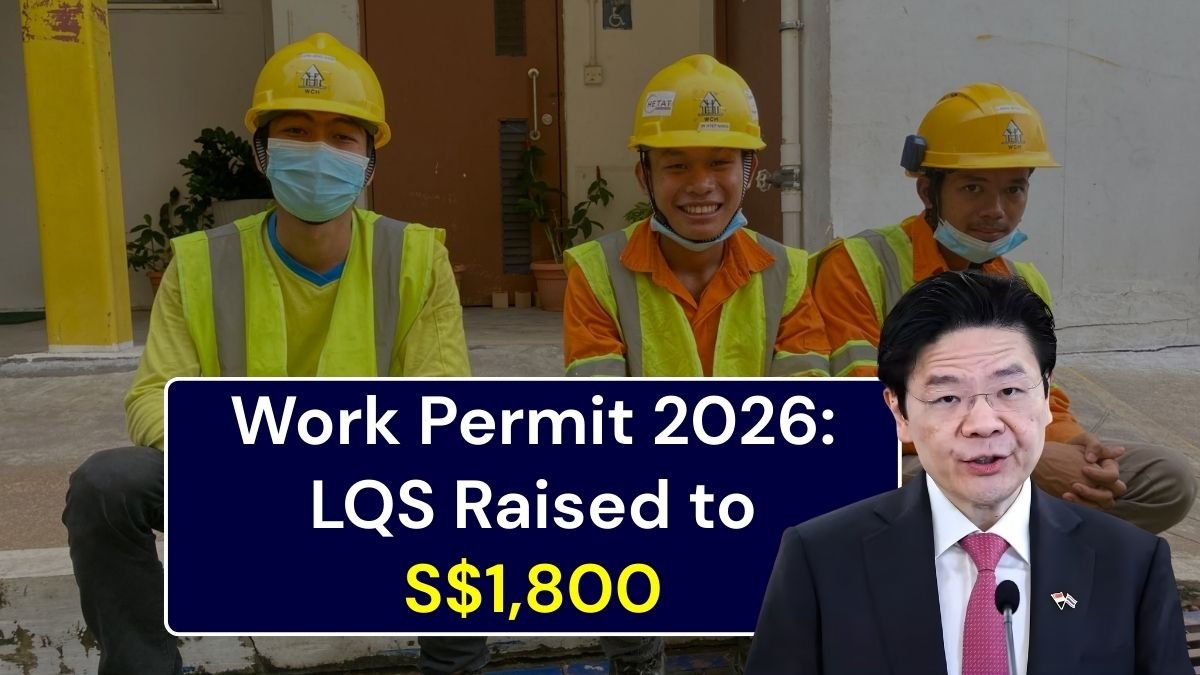
Singapore’s labour policies are evolving to support sustainable workforce growth and protect local employment opportunities. The Work Permit 2026 updates introduce several important changes, including an increase in the Local Qualifying Salary (LQS) to S$1,800, higher age limits for foreign workers, and revised quota rules for employers.
For businesses operating in Singapore—especially in sectors like construction, manufacturing, and services—these changes have a direct impact on foreign worker hiring strategies, payroll compliance, and workforce planning.
Key Work Permit Changes in 2026
1. Local Qualifying Salary (LQS) Raised to S$1,800
One of the most significant updates is the increase in the Local Qualifying Salary (LQS) to S$1,800 per month. The LQS determines whether a local employee can be counted toward a company’s foreign worker quota.
This adjustment aims to ensure that employers maintain a strong local workforce while hiring foreign employees through Singapore Work Permits. Companies must pay at least S$1,800 to local workers to qualify for quota calculations.
For businesses, this means higher payroll planning requirements and stricter manpower compliance rules. Companies that rely heavily on foreign labour may need to review their salary structures, HR policies, and workforce ratios.
High-value sectors such as financial services, logistics, and technology outsourcing firms are increasingly consulting Singapore employment law experts and HR compliance services to adapt to these regulatory updates.
2. Higher Age Limits for Foreign Workers
Another key change under the Work Permit policy updates is the adjustment of maximum age limits for foreign workers.
This policy shift allows employers to retain experienced workers for longer periods, particularly in industries where skills and experience are essential. The higher age limit helps reduce labour shortages while maintaining Singapore’s strict workforce regulations.
For employers, retaining skilled workers can reduce recruitment costs and training expenses. Businesses that depend on long-term workforce stability—such as construction contractors, marine engineering firms, and manufacturing companies—benefit from this change.
From a compliance perspective, companies must still ensure workers meet health, safety, and work permit renewal requirements under Singapore’s employment regulations.
3. Updated Foreign Worker Quota Rules
The foreign worker quota system, also known as the Dependency Ratio Ceiling (DRC), has been updated to better balance local and foreign employment.
These revised quota rules mean employers must carefully calculate how many Work Permit holders they can hire based on their local workforce size and LQS compliance.
Businesses exceeding quota limits may face:
- Higher foreign worker levy costs
- Restrictions on new work permit applications
- Compliance penalties under Singapore manpower regulations
As a result, many companies are now investing in HR management software, workforce compliance consulting, and payroll automation systems to maintain accurate workforce reporting.
High-CPC business services such as corporate HR outsourcing, employment law advisory, and workforce compliance consulting in Singapore are seeing increased demand due to these regulatory changes.
What These Changes Mean for Employers
The Singapore Work Permit 2026 updates signal a continued effort by the government to encourage higher-quality local employment while maintaining access to foreign labour where necessary.
Employers should take proactive steps such as:
- Reviewing payroll structures to meet the S$1,800 LQS requirement
- Updating workforce planning to comply with new quota limits
- Consulting Singapore HR compliance specialists or employment lawyers
- Implementing HR and payroll software solutions to manage workforce data
Businesses that adapt early will be better positioned to maintain compliance while managing labour costs effectively.
Conclusion
The 2026 Work Permit updates in Singapore represent a strategic shift toward a more balanced and sustainable labour market. With the LQS increase to S$1,800, higher foreign worker age limits, and updated employer quota rules, companies must reassess their workforce strategies.
Employers who stay informed and invest in professional HR consulting, payroll compliance services, and workforce management technology will find it easier to navigate these changes while maintaining operational efficiency.
Understanding these policy updates is critical for businesses aiming to remain compliant and competitive in Singapore’s evolving employment landscape.
FAQ – People Also Ask
1. What is the new Local Qualifying Salary (LQS) in Singapore for 2026?
The Local Qualifying Salary has increased to S$1,800 per month, allowing local employees to be counted toward a company’s foreign worker quota.
2. How does the LQS affect foreign worker quotas?
Employers must pay local employees at least S$1,800 to include them in quota calculations, which determines how many foreign workers they can hire.
3. Are there changes to the age limit for Work Permit holders?
Yes. The updated policy increases the maximum age limit for foreign workers, allowing employers to retain experienced workers longer.
4. What happens if a company exceeds the foreign worker quota?
Employers may face higher foreign worker levy costs, hiring restrictions, or compliance penalties.
5. Where can employers check official Work Permit policy updates?
Employers should refer to the Singapore Ministry of Manpower (MOM) website for the latest regulations and compliance requirements.